Home » Without Label » 40+ schön Bild Inner Join On / A Step By Step Walkthrough Of Sql Inner Join : Returns records that have matching values in both tables.
40+ schön Bild Inner Join On / A Step By Step Walkthrough Of Sql Inner Join : Returns records that have matching values in both tables.
40+ schön Bild Inner Join On / A Step By Step Walkthrough Of Sql Inner Join : Returns records that have matching values in both tables.. It appears immediately after the from clause. This condition is called join condition i.e., b.n = a.n the inner join clause can join three or more tables as long as they have relationships, typically foreign key relationships. The inner join clause appears after the from clause. In most cases implicit joins will act as inner joins. Mysql assumes it as a default join, so it is optional to use the inner join keyword with the query.
Join (other, on = none, how = 'left', lsuffix = '', rsuffix = '', sort = false) source ¶ join columns of another dataframe. Sql joins with comparison operators. It is most often used to filter the data. The query compares each row in the orders table with rows in the order_items table. An inner join is such type of join that returns all rows from both the participating tables where the key record of one table is equal to the key records of another table.
Inner Join And Outer Join from saphelp.ucc.ovgu.de This is the most common type of join. The syntax for the inner join in sql is: The following illustrates inner join syntax for joining two tables: Inner joins combine records from two tables whenever there are matching values in a field common to both tables. While joining at least one column should be of the same data type and common among tables. An inner join clause that is between onlinecustomers and orders tables derived the matched rows between these two tables. Here is the syntax of the inner join clause: If you use inner join without the on clause (or if you use comma without a where clause), the result is the same as using cross join:
Outer joins and cross joins can be specified in the from clause only.
The inner join matches each row in one table with every row in other tables and allows you to query rows that contain columns from both tables. Chances are, you've already written a sql statement that uses an sql inner join. This is the most common type of join. The join conditions combine with the where and having search conditions to control the rows that are selected from the base tables referenced in the from clause. Here is the syntax of the inner join clause: The query compares each row in the orders table with rows in the order_items table. We'll start with inner joins. If you want to use a join other than an inner join stating it explicitly makes it clear what is going on. To query data from related tables, you often use the join clauses, either inner join or left join. Sql inner joins return all rows from multiple tables where the join condition is met. Joining in the where clause can be confusion since this is not it's typical purpose. The next join type, inner join, is one of the most commonly used join types. If these values are equal, the inner join creates a new row that contains all columns of both tables and adds it to the result set.
The inner join keyword selects records that have matching values in both tables. Inner join = all common rows from both tables. The result of the inner join is augmented with a row for each row of o1 that has no matches in o2. Select * from orders inner join order_items on order_items.order_id = orders.order_id order by order_date desc ; Chances are, you've already written a sql statement that uses an sql inner join.
Sqlite Inner Join W3resource from www.w3resource.com Returns records that have matching values in both tables. Mysql assumes it as a default join, so it is optional to use the inner join keyword with the query. If these values are equal, the inner join creates a new row that contains all columns of both tables and adds it to the result set. To query data from related tables, you often use the join clauses, either inner join or left join. Update t1 set t1.c1 = t2.c2, t1.c2 = expression,. If the corresponding row found, the query. An inner join only returns rows where the join condition is true. A cartesian product (every row of o1 paired with every row of o2).
The simplest join is inner join.
Mysql assumes it as a default join, so it is optional to use the inner join keyword with the query. The query compares each row in the orders table with rows in the order_items table. A multiple join in which successive join operations are appended to each other. For each row in the table_1, the query find the corresponding row in the table_2 that meet the join condition. The mysql inner join is used to returns only those results from the tables that match the specified condition and hides other rows and columns. Update t1 set t1.c1 = t2.c2, t1.c2 = expression,. Sql joins using where or on. The join conditions combine with the where and having search conditions to control the rows that are selected from the base tables referenced in the from clause. This condition is called join condition i.e., b.n = a.n the inner join clause can join three or more tables as long as they have relationships, typically foreign key relationships. An inner join only returns rows where the join condition is true. O1 left outer join o2. The inner join clause appears after the from clause. Chances are, you've already written a sql statement that uses an sql inner join.
A left outer join will return all the rows from table 1 and only those rows from table 2 which are common to table 1 as well. A right outer join will do just the opposite. For each row in the table a, inner join compares the value in the pka column with the value in the fka column of every row in the table b: Inner join = all common rows from both tables. To query data from related tables, you often use the join clauses, either inner join or left join.
Sql Server Inner Join With Examples Sql Server Tutorial from www.sqlservertutorial.org An inner join that correlates elements from two data sources based on a composite key. The inner join is an optional clause of the select statement. An inner join clause that is between onlinecustomers and orders tables derived the matched rows between these two tables. The mysql inner join is used to returns only those results from the tables that match the specified condition and hides other rows and columns. For each row in the table_1, the query find the corresponding row in the table_2 that meet the join condition. The following statement retrieves the product information from the production.products table: See the following products and categories tables: Inner joins can be specified in either the from or where clauses.
You can use an inner join operation in any from clause.
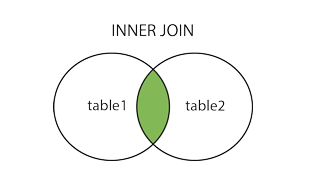
In most cases implicit joins will act as inner joins. Inner joins combine records from two tables whenever there are matching values in a field common to both tables. The inner join is one of the most commonly used joins in sql server. This condition is called join condition i.e., b.n = a.n the inner join clause can join three or more tables as long as they have relationships, typically foreign key relationships. The query compares each row in the orders table with rows in the order_items table. O1 left outer join o2. Sql inner joins return all rows from multiple tables where the join condition is met. Update t1 set t1.c1 = t2.c2, t1.c2 = expression,. The following illustrates the syntax of the update join clause: The condition to match between table a and table b is specified after the on keyword. An inner join will return the common area between these tables (the green shaded area in the diagram above) i.e. Inner join is ansi syntax that you should use. This is the most common type of join.